

If you're wondering whether you can get testosterone replacement therapy (TRT) through the NHS, the short answer is yes, but only once a clear diagnosis is confirmed. The NHS doesn't prescribe TRT on symptoms alone, and the path from your first GP appointment to an actual prescription is often slower and more structured than many men expect. This guide sets out exactly what the NHS looks for before treating low testosterone, how the GP and specialist referral routes work, why waiting times differ so much by area, and what a legitimate private alternative looks like if the NHS route doesn't fit your circumstances.
What the NHS needs before prescribing TRT
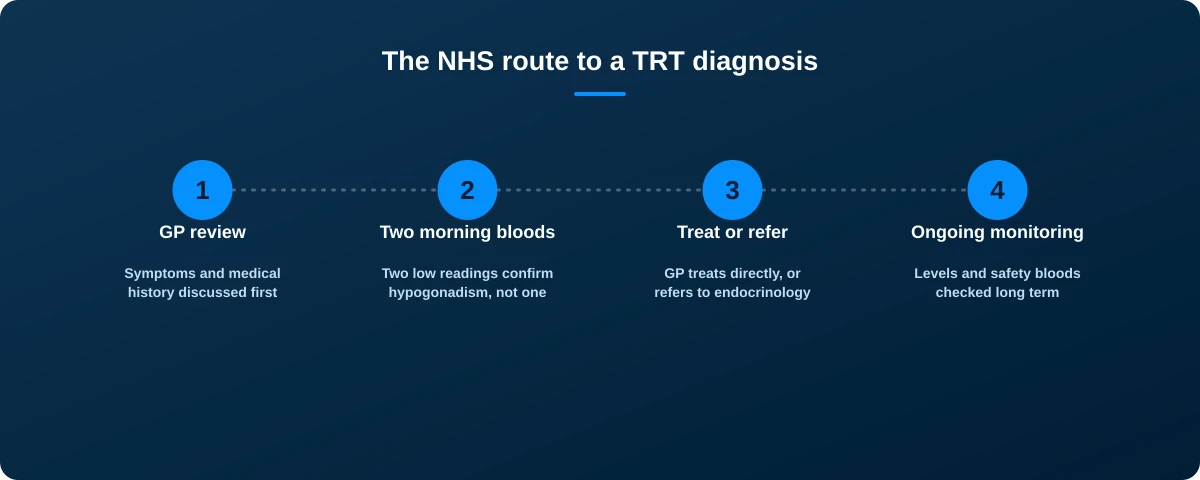
NHS prescribing of testosterone replacement therapy follows guidance from the British Society for Sexual Medicine (BSSM), and the bar it sets is deliberately strict: a diagnosis of hypogonadism needs both symptoms that fit the picture, such as persistent fatigue, low libido, erectile difficulties, low mood or a noticeable loss of muscle mass, and two separate morning testosterone readings below the normal range. The blood draws are timed for a reason: testosterone follows a daily rhythm and is at its highest before around 11am, so an afternoon reading can look artificially low and mislead the whole picture.
A single low result, or symptoms without blood confirmation either way, isn't usually enough to start treatment. Alongside testosterone, your GP will typically also check LH, FSH and SHBG, and sometimes prolactin, to help establish whether your low testosterone has a primary cause (a problem with the testes themselves) or a secondary one (involving the pituitary or hypothalamus), since that distinction affects whether other causes need ruling out before TRT is considered appropriate.
The GP route and specialist referral
Once hypogonadism is confirmed, your GP has two broad options: treat you directly, or refer you to a specialist. Whether your own GP initiates treatment often comes down to local policy and individual confidence with TRT rather than anything about your case specifically; many GPs are comfortable starting straightforward cases, particularly where there's an obvious contributing factor such as obesity or a known pituitary issue already under review. Others, especially where the cause isn't clear-cut or there's a specific testicular or pituitary concern to investigate first, will refer you on to endocrinology or, less commonly, urology.
A referral isn't a sign that something has gone wrong with your case, it's simply how the system is designed to work when a diagnosis needs specialist input or ongoing care falls outside what a GP practice typically manages. If you are referred, the specialist will usually repeat or review your blood results, consider whether any further investigation is needed (an MRI of the pituitary gland in a small number of cases, for example), and confirm the formulation and starting dose before treatment begins. Our guide to what blood tests are needed for TRT covers the full panel a GP or specialist is likely to request before any prescribing decision is made.

Why NHS waits vary so much
Waiting times for TRT on the NHS vary enormously depending on where you live, and that's largely down to local commissioning decisions and the pressure on hospital endocrinology services in your area rather than anything about how straightforward your case is. The blood tests and initial GP workup themselves are rarely the bottleneck; most practices can arrange morning testosterone bloods within a couple of weeks. The real variation shows up at the specialist step: in some areas an endocrinology referral is seen within a matter of weeks, while in others it can mean a wait of several months before your first appointment.
This unevenness is exactly why some men start exploring private TRT in parallel with, or instead of, a specialist referral: not because the NHS route is unavailable to them, but because the waiting list in their particular area makes it impractical for symptoms that are affecting day-to-day life now.
It's also worth knowing that some integrated care boards (ICBs) set additional local criteria on top of the BSSM standard, for example around which GPs are permitted to initiate treatment without specialist sign-off, so two men with near-identical blood results and symptoms can have genuinely different NHS experiences depending on which part of the country they live in. Your GP will usually be able to tell you what the local pathway looks like once your results come back.
Private TRT: what good practice looks like
Longer specialist waits are one of the main reasons men look at private TRT, and done properly it isn't a shortcut around the diagnostic standard, it's simply a faster route to the same one. A legitimate private UK TRT provider is CQC-registered, follows the same BSSM prescribing standards the NHS uses (the same two-reading blood test requirement, the same ongoing monitoring schedule), and has prescriptions dispensed through a GPhC-registered pharmacy rather than supplied directly by the clinic itself.
Because testosterone is a prescription-only medicine in the UK, no legitimate provider, NHS or private, will supply it without a valid prescription following proper assessment and confirmed blood results. That's also the clearest warning sign to watch for: any provider offering testosterone without first arranging baseline bloods, or promising treatment regardless of your results, is not operating to UK standards and should be avoided. A properly run private pathway typically starts with a consultation and a home or in-clinic blood test, followed by a clinician reviewing your results against your symptoms before any prescription is written, which is the same sequence the NHS follows, just without the local waiting-list variation. Our breakdown of how much TRT costs in the UK sets out what a properly run private pathway typically charges at each stage, from initial workup through to ongoing monitoring.
Shared care: can your GP take over a private prescription?
Many men who start TRT privately eventually ask whether their GP can take over prescribing and monitoring once things are settled, an arrangement known as shared care. Some practices do agree to this: once your diagnosis, stable dose and recent monitoring results are established by your private provider, a GP practice may be willing to continue routine blood tests and repeat prescriptions from that point onward, which can make ongoing treatment considerably cheaper and more convenient.
It isn't a right, though, and it certainly isn't something every practice will agree to. The decision sits with your individual GP practice and is shaped by local commissioning policy, and some practices decline shared care for testosterone altogether, regardless of how thoroughly your case is documented. If shared care isn't available to you, or you're considering a change of private provider for another reason, our guide to switching TRT providers explains how to move your care without a gap in treatment.
Questions to ask whichever route you take
Whether you end up on the NHS pathway, a private one, or some combination of the two, a few questions are worth asking at every stage:
- Which blood tests confirmed my diagnosis, and what were the actual results? You're entitled to understand the evidence behind your own treatment decision.
- What ongoing monitoring will I need, and how often? TRT is not a one-off prescription; it needs regular review for as long as you stay on treatment.
- If I'm considering a private provider, are they CQC-registered, and which GPhC-registered pharmacy dispenses my medication? Both should be stated clearly and easy to verify.
- If I start privately, is shared care realistically available through my own GP practice? Worth asking your practice directly rather than assuming either way.
- What happens if I need to pause, stop or switch treatment? A good provider, NHS or private, should be able to answer this before you start, not only once you ask.
Whichever route you choose, TRT is not a decision made once and then forgotten. It needs lifelong monitoring covering your testosterone level, full blood count and other safety markers, and that ongoing review matters just as much as how you got your initial diagnosis. Your clinician, whether NHS or private, will advise on what's appropriate based on your individual results and circumstances.