

This guide answers the questions UK patients most often ask about Mounjaro, from how it works and who can have it to doses, side effects, cost and what happens when you stop. It is written by Farmeci's clinical team as patient education and is not a substitute for a consultation. Every treatment decision is made by a UK-registered prescriber after assessing you individually.
The basics: what Mounjaro is and how it works
Mounjaro is the brand name for tirzepatide, a once-weekly injection made by Eli Lilly. It was licensed by the MHRA for type 2 diabetes in 2023 and for weight management later the same year. These are the questions people ask first.
What is Mounjaro and how does it work?
Mounjaro contains tirzepatide, which acts on two gut-hormone receptors at once: GLP-1 and GIP. Together they slow stomach emptying, reduce appetite signals in the brain and improve how the body handles insulin. The practical effect is that people feel full sooner, think about food less and eat less without a constant sense of restriction. It is given as a small injection under the skin once a week, on the same day each week.
Is Mounjaro a diabetes drug or a weight-loss drug?
Both. In the UK it is licensed for adults with type 2 diabetes and, separately, for weight management in adults with a BMI of 30 or more, or 27 or more with at least one weight-related condition such as high blood pressure, sleep apnoea or prediabetes. The weight-management licence requires it to be used alongside a reduced-calorie diet and increased physical activity, not instead of them.
How is Mounjaro different from Wegovy and Ozempic?
Wegovy and Ozempic both contain semaglutide, which works on the GLP-1 receptor only. Mounjaro adds GIP activity. In the SURMOUNT-5 head-to-head trial published in 2025, people on tirzepatide lost an average of 20.2% of body weight over 72 weeks compared with 13.7% on semaglutide. Ozempic is licensed for type 2 diabetes, not weight management, so it is not a like-for-like alternative. Read the full comparison of the three.
Is Mounjaro approved in the UK?
Yes. The MHRA licensed Mounjaro for type 2 diabetes in 2023 and extended the licence to weight management in November 2023. NICE has also recommended tirzepatide for NHS use in weight management, with a phased rollout that began in June 2025 for people with the highest clinical need. Private prescribing through regulated UK pharmacies has been available since the licence was granted.
Who can and cannot have Mounjaro
Eligibility is set by the licence and by clinical judgement, not by how much weight someone wants to lose. A UK-registered prescriber checks all of this at consultation.
Who is eligible for Mounjaro for weight loss?
Adults with a BMI of 30 kg/m² or above, or 27 kg/m² or above with at least one weight-related health condition. Lower BMI thresholds apply for people of South Asian, Chinese, other Asian, Middle Eastern, Black African or African-Caribbean family background, because health risks rise at a lower BMI in these groups. A prescriber also checks your medical history, current medicines and whether you have tried lifestyle measures first.
Can I get Mounjaro on the NHS?
Only in limited circumstances for now. NICE recommends tirzepatide for people with a BMI of 35 or more plus at least one weight-related condition, but the NHS is introducing it in phases over several years, starting with people who have a BMI of 40 or more and several existing conditions. Most people who meet the licence criteria will not yet qualify for NHS supply. See who qualifies for NHS treatment.
Who should not take Mounjaro?
It is not licensed for anyone under 18 for weight management, and it should not be used in pregnancy or while breastfeeding. It is not a treatment for type 1 diabetes. Prescribers are cautious or will decline if you have a history of pancreatitis, severe gut problems such as gastroparesis, a current or past eating disorder, or a BMI below the licensed threshold. Always tell your prescriber about every medicine and condition, even ones that seem unrelated.
Can I take Mounjaro if I am trying to get pregnant?
No. The licence advises stopping Mounjaro at least one month before trying to conceive, because the medicine stays in the body for several weeks and there is not enough safety data in pregnancy. If you become pregnant while taking it, stop and speak to your GP or midwife promptly. Mounjaro is also not recommended while breastfeeding.
Does Mounjaro affect the contraceptive pill?
It can. Because Mounjaro slows stomach emptying, the absorption of oral contraceptives may be reduced. The UK product information advises anyone using the pill to switch to a non-oral method or add a barrier method for four weeks after starting Mounjaro and for four weeks after each dose increase. Contraceptive implants, injections, coils and patches are not affected.
Starting Mounjaro: doses, injections and the pen
Mounjaro is started low and increased gradually. The slow build-up is what keeps side effects manageable, so the schedule is worth understanding before your first injection.
What dose do you start on?
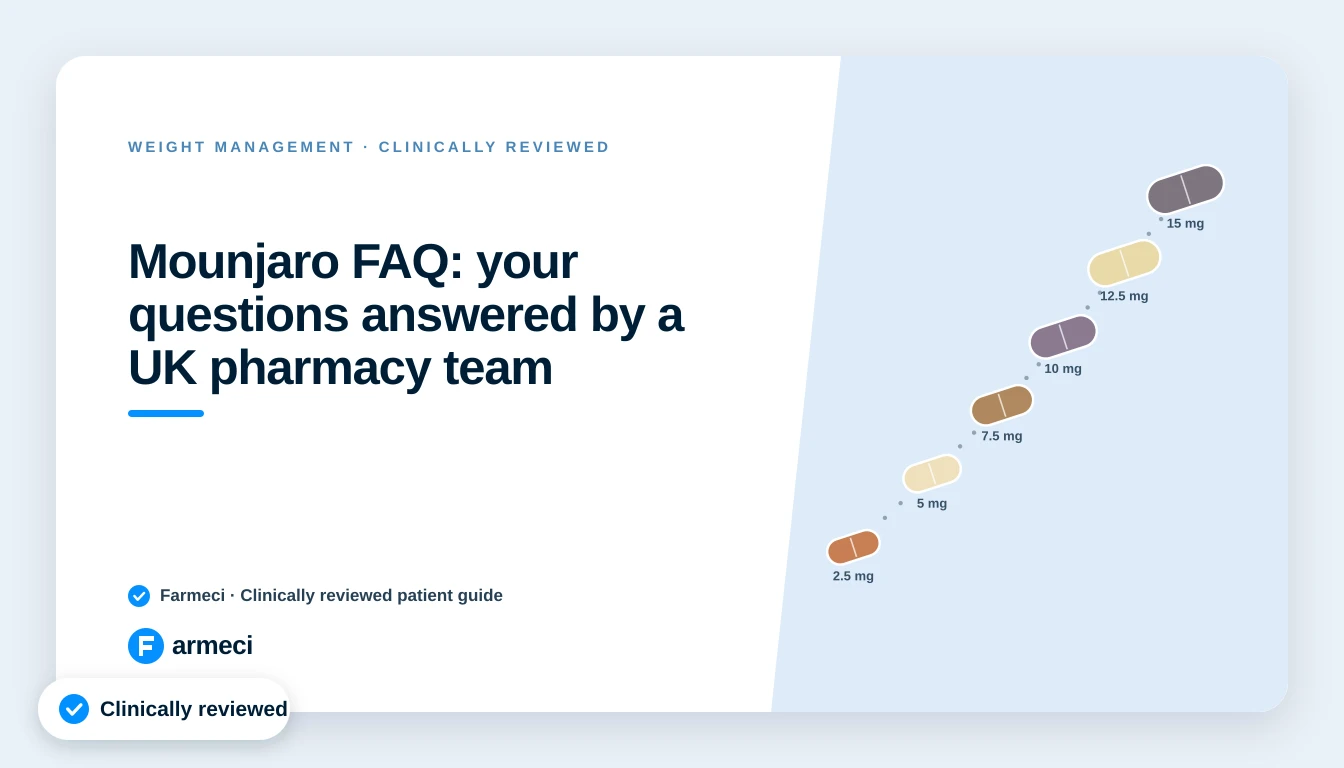
Everyone starts on 2.5 mg once a week for four weeks. This is a starting dose designed to let your body adjust; it is not expected to produce much weight loss on its own. After four weeks the dose moves to 5 mg, which is the first maintenance dose. Further increases to 7.5 mg, 10 mg, 12.5 mg and a maximum of 15 mg are made in 2.5 mg steps, each after at least four weeks on the current dose.
When should the dose go up?
Only when you have been on your current dose for at least four weeks and side effects have settled. Many people stay on 5 mg or 7.5 mg for months if they are losing weight steadily and feel well. Going up is a decision to make with your prescriber at each review, not a target to chase. More on timing dose increases.
How do I inject Mounjaro and where?
The injection goes just under the skin of the stomach (at least 5 cm from the belly button), the front of the thigh, or the back of the upper arm if someone else is injecting. Rotate the spot each week. It can be taken at any time of day, with or without food. Your pharmacy or clinic will show you the technique and the patient leaflet has step-by-step pictures.
How does the Mounjaro KwikPen work?
In the UK Mounjaro comes as a multi-dose KwikPen that holds four weekly doses at a fixed strength, with needles supplied separately. You attach a new needle, dial the dose, inject and dispose of the needle in a sharps bin. Each strength from 2.5 mg to 15 mg has its own pen, so you get a new pen when your dose changes.
How should I store Mounjaro?
Keep unused pens in the fridge at 2 to 8°C, in the box, away from the freezer compartment. Once a pen is in use it can be kept out of the fridge below 30°C and should be used within 30 days; check the leaflet supplied with your pen for the exact figures for your product. Never use a pen that has been frozen or that looks cloudy or discoloured.
What if I miss a dose?
If you remember within four days (96 hours) of your usual day, take it as soon as you can and carry on with your normal weekly day. If more than four days have passed, skip the missed dose and take the next one on your scheduled day. Never take two doses within three days of each other.
Can I change my injection day?
Yes, as long as there are at least three days (72 hours) between the last dose and the new one. People often shift their day to suit work or travel. Taking Mounjaro a day early is covered here.
What to expect: results, timing and daily life
Weight loss on Mounjaro is gradual and varies a lot between people. These answers draw on the SURMOUNT trials, which are the main evidence base for the weight-management licence.
How much weight can you lose on Mounjaro?
In the SURMOUNT-1 trial, adults without diabetes lost an average of 15% of their body weight on 5 mg, 19.5% on 10 mg and 20.9% on 15 mg over 72 weeks, compared with 3.1% on placebo, all alongside diet and activity support. Results in real life are often a little lower, and some people respond much more than others. People with type 2 diabetes typically lose somewhat less.
How quickly does Mounjaro start working?
Appetite usually changes within the first one or two weeks. Weight loss during the four weeks on 2.5 mg is often modest; the clearer losses tend to start at 5 mg and build over the following months. Most of the trial weight loss happened over the first 9 to 12 months before levelling off. Why weight loss can stall, and what helps.
What should I eat on Mounjaro?
Smaller portions of protein-rich, fibre-rich meals, with plenty of fluids. Because you will eat less, the quality of what you eat matters more: enough protein helps protect muscle while you lose fat. Very fatty, fried or very sugary foods tend to worsen nausea. A practical eating guide for Mounjaro.
Can I drink alcohol on Mounjaro?
There is no formal interaction, but alcohol often feels stronger because your stomach empties slowly, it can worsen nausea, and it lowers blood sugar, which matters if you also take insulin or a sulfonylurea. Many people find they want less alcohol anyway. Keep it occasional and modest, especially in the first weeks and after each dose increase. More on alcohol and Mounjaro.
Why am I so tired on Mounjaro?
Tiredness is common in the first weeks and usually reflects eating much less than before, mild dehydration from nausea, and the body adjusting. Regular meals with enough protein, plenty of fluids and not skipping breakfast usually help. Persistent exhaustion should be discussed with your prescriber in case something else is going on. Read more about tiredness on Mounjaro.
Does Mounjaro cause hair loss or the so-called Ozempic face?
Hair shedding can follow any rapid weight loss and usually recovers once weight stabilises; it is a response to the weight loss rather than a direct drug effect. Facial changes reflect fat loss in the face and are more noticeable with faster loss. Slower, steadier loss and enough protein reduce both. Hair loss on Mounjaro and what people mean by Ozempic face are explained in detail elsewhere on this site.
Side effects and safety
Most side effects are digestive, mild to moderate, and settle as your body adjusts. A small number of problems are serious and need prompt attention. Knowing the difference is the point of this section.
What are the most common side effects?
Nausea, diarrhoea, constipation, vomiting, indigestion, stomach pain, reduced appetite, tiredness and mild reactions at the injection site. They are most likely in the first few weeks and for a week or two after each dose increase. Eating smaller meals, avoiding fatty food and staying hydrated make a real difference. What actually helps with nausea.
How long do Mounjaro side effects last?
For most people the digestive effects ease within two to four weeks of starting or increasing a dose. If they do not settle, your prescriber can hold the dose rather than increasing it, or step back down. Side effects that are getting worse rather than better, or that stop you keeping fluids down, need a same-day conversation with a clinician. A week-by-week guide to side effects.
What are the serious side effects to watch for?
Severe, persistent pain in the upper stomach that may spread to the back, with or without vomiting, can be pancreatitis: stop the medicine and seek urgent care. Pain under the right ribs, fever or yellowing of the skin can signal gallbladder problems. Repeated vomiting or diarrhoea can cause dehydration and strain the kidneys. Any swelling of the face or throat, or difficulty breathing, is an emergency. Side effects can be reported to the MHRA through the Yellow Card scheme.
Can Mounjaro cause low blood sugar?
On its own, rarely. The risk rises if you also take insulin or a sulfonylurea such as gliclazide, and your diabetes team may lower those doses when you start. Signs of low blood sugar include shakiness, sweating, confusion and a fast heartbeat; treat with fast-acting sugar and tell your prescriber.
Is Mounjaro safe for the thyroid?
Tirzepatide caused thyroid C-cell tumours in rodent studies, and the UK leaflet asks you to report a lump in the neck, hoarseness or difficulty swallowing. Whether this applies to humans is not established. People with a personal or family history of medullary thyroid cancer or MEN 2 should discuss this carefully with their prescriber. Mounjaro and thyroid conditions.
Is Mounjaro safe overall?
For eligible adults under clinical supervision, the trial and real-world evidence support its use, and the benefits of substantial weight loss on blood pressure, blood sugar, sleep apnoea and joint pain are well documented. Safety depends on honest screening, slow dose increases and regular review. A balanced look at the risks and benefits.
Does Mounjaro interact with other medicines?
Because it slows stomach emptying it can change how quickly oral medicines are absorbed. This matters most for medicines with a narrow margin, such as warfarin, and for oral contraceptives as described above. Insulin and sulfonylureas may need dose changes. Always give your prescriber and pharmacist a full list of what you take, including supplements.
Do I need to stop Mounjaro before surgery or an anaesthetic?
Tell the surgical and anaesthetic team that you take it. Because the stomach empties more slowly, UK anaesthesia guidance treats people on these medicines as potentially having food in the stomach and may adjust fasting instructions or the anaesthetic plan. Do not stop or restart around surgery without being told to by the team looking after you.
Cost, access and practicalities
Private treatment in the UK is regulated: the prescriber must assess you properly and the pharmacy must be GPhC-registered. Here is what that looks like in practice.
How do I get Mounjaro in the UK?
Either through the NHS if you meet the current phased criteria, or privately through a regulated online or high-street pharmacy service. A private route involves a consultation with a UK-registered prescriber, verification of your height and weight, a review of your medical history, and ongoing check-ins while you are on treatment. You can see the current options on the Farmeci Mounjaro page. Step-by-step guide to getting Mounjaro in the UK.
Why do pharmacies ask for photos or a video call?
Since February 2025 the General Pharmaceutical Council requires pharmacies supplying weight-management medicines to verify a patient's weight and height independently, rather than relying on an online questionnaire alone. That means a video consultation, an in-person check or access to clinical records. A service that skips this step is not following UK regulatory guidance.
How much does Mounjaro cost privately?
Prices depend on the dose, the pharmacy and whether clinical support is included, and they changed significantly when Eli Lilly raised UK list prices in September 2025. Expect higher doses to cost more per month than the starting dose. Current UK prices are tracked here, and this explainer covers why prices vary between pharmacies.
Can I switch from Wegovy to Mounjaro?
Yes, under clinical supervision. There is no fixed conversion between the two, so prescribers usually start Mounjaro at 2.5 mg or a low step and build up, rather than matching the previous Wegovy dose. Expect some return of early side effects during the switch. Never run the two together.
Can I travel with Mounjaro?
Yes. Carry pens in hand luggage with a copy of your prescription or a letter from your pharmacy, keep them cool with an insulated pouch for long journeys, and pack enough needles and a travel sharps container. Pens in use can stay out of the fridge below 30°C for the period stated in your leaflet, which covers most holidays.
Can I drive and work normally on Mounjaro?
Yes. Mounjaro does not impair driving. The only caution is low blood sugar if you also take insulin or a sulfonylurea, in which case follow the usual DVLA guidance on hypoglycaemia awareness.
Stopping Mounjaro
Mounjaro treats a long-term condition, so stopping is a clinical decision rather than a finish line. Planning it properly protects the progress you have made.
What happens when you stop Mounjaro?
Appetite returns over a few weeks and, without ongoing support, most people regain a meaningful share of the weight. In the SURMOUNT-4 trial, people switched to placebo after 36 weeks regained about 14% of body weight over the following year, while those who continued kept losing. The weight regain is not a personal failure; it is the biology of appetite reasserting itself. What the evidence says about stopping.
Do I have to stay on Mounjaro forever?
Not necessarily, but you should plan for the long term. Some people step down to a lower maintenance dose, some stop and keep most of their loss with structured support, and many need to continue. NICE recommends that any course of weight-management medicine is paired with a plan for what happens afterwards. Discuss the exit strategy with your prescriber before you start, not after.
How do I come off Mounjaro safely?
Mounjaro does not cause withdrawal, so it can simply be stopped, but a gradual step-down with a clear plan for eating, activity and follow-up gives the best chance of keeping weight off. If you are stopping because of side effects, tell your prescriber: a lower dose or a slower increase may solve the problem without stopping altogether.
Where to go from here
If you think Mounjaro might be right for you, the next step is a proper clinical assessment rather than more reading. The Farmeci Mounjaro page explains how Farmeci's consultation works and what the prescriber will ask. You can also browse the rest of our weight management guides.