

If you've been prescribed testosterone replacement therapy (TRT) and your clinician has suggested gel rather than injections, you're likely to be using Testogel, Tostran or Testavan: the three testosterone gels licensed for use in the UK. Gel is a popular first choice because it's applied at home, gives steady day to day levels, and is easy to adjust or stop if it doesn't suit you. This guide explains how the gels work, how they differ, how to apply them safely, and how they compare with testosterone injections.
How testosterone gel works
Testosterone gel, sometimes called topical TRT, delivers testosterone through the skin rather than by injection or tablet. Once applied to clean, dry skin, the hormone is absorbed gradually into the bloodstream over several hours, topping up your circulating testosterone level each day rather than delivering it in a single dose.
Because absorption happens continuously through the day, gel tends to produce steadier testosterone levels than an injection, which creates a peak shortly after the dose and a trough as it wears off before the next one is due. For many men this steadiness is the main appeal: fewer noticeable ups and downs in energy, mood or libido across the week.
Gel is a prescription-only medicine in the UK, meaning it's only started and monitored by a GP or private clinician once low testosterone has been confirmed on blood tests, not something to self-select without a diagnosis.
The gels licensed in the UK and how they differ
Three testosterone gels are currently licensed in the UK, and while they all work the same way, the details differ enough to matter:
- Testogel comes in single-dose sachets or a metered-dose pump, usually applied to the shoulders, upper arms or abdomen.
- Tostran is delivered from a metered-dose pump and is typically applied to the abdomen or inner thighs.
- Testavan is a newer, higher-concentration gel delivered from a metered pump, applied once daily to the upper arms and shoulders, often in a smaller volume than the older products.
Your clinician's choice usually comes down to your starting dose, how the product fits your daily routine, and sometimes simply which pack format you find easiest to use consistently. Switching between them is possible if one doesn't suit you, but your dose will usually need re-checking afterwards, since they aren't interchangeable milligram for milligram.
How and when to apply it
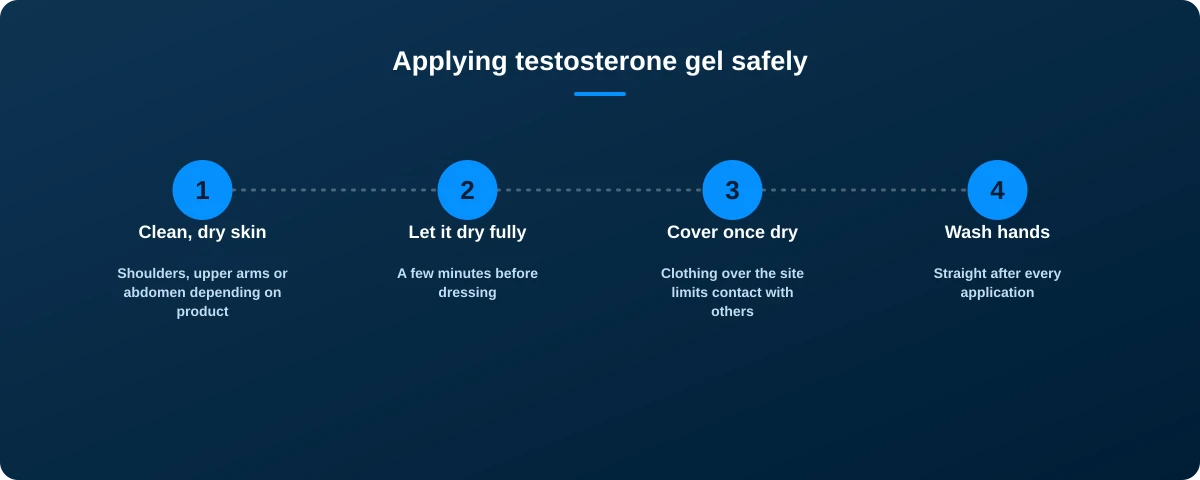
Testosterone gel is applied once daily, usually at the same time each morning, to clean, dry skin. Depending on the product, this means the shoulders, upper arms or abdomen; check your patient information leaflet for the exact sites your gel is licensed for, since the three aren't interchangeable in this respect.
After applying, let the gel dry fully before dressing, which usually takes a few minutes. Avoid showering, swimming or washing the application site for several hours afterwards (your leaflet gives the exact window), since this can wash away testosterone before it's fully absorbed and reduce the dose you actually receive.
Sticking to the same time and sites each day helps keep your absorption, and therefore your levels, consistent. If you forget a dose, apply it as soon as you remember that day rather than doubling up the next day to catch up.
Avoiding transfer to partners and children
The biggest practical difference between gel and other TRT formulations is the risk of transferring testosterone to someone else through skin contact. Because the gel sits on the surface of the skin before it's absorbed, direct contact with the application site, especially within the first few hours, can pass testosterone to a partner, child or pet.
The MHRA has issued specific safety warnings about this, and the precautions are straightforward: wash your hands thoroughly with soap and water immediately after applying, and cover the area with clothing once the gel has dried. Avoid close skin to skin contact at the application site until you've showered or a full day has passed, and take particular care around pregnant partners and children, who are more sensitive to even small amounts of transferred testosterone.
If accidental contact does happen, washing the area with soap and water as soon as possible reduces the amount absorbed. It's worth mentioning this to your clinician if it happens more than once, since persistent accidental exposure in a partner or child needs its own medical review.
Gel vs injections: steadiness, convenience and monitoring
Choosing between gel and injectable testosterone usually comes down to a trade-off between steadiness and convenience.
Gel needs applying every day without exception, which suits people who prefer a predictable routine but is a daily commitment that injections don't require. In return, gel avoids the peak and trough pattern some men notice with injections, where mood, energy or libido can dip in the days before the next dose is due.
Injections are given less often, anywhere from weekly to every few months depending on the preparation, which many people find more convenient day to day, but levels fluctuate more across that interval. Monitoring differs too: gel levels are checked a few hours after application since that reflects your steady state, while injection levels are usually checked partway between doses to capture a representative mid-cycle reading.
Neither option is objectively better: the right formulation depends on how your body responds, your tolerance for a daily routine, and how you feel across the dosing interval. Our guide to testosterone replacement therapy covers both options and the wider diagnostic pathway in more detail.
How the dose is adjusted
Starting doses are generally conservative, with adjustment based on how you respond rather than a fixed schedule. Once you've been using the same gel and dose for a few weeks, your clinician will usually check your testosterone level 2 to 4 hours after application: this timing captures your levels near their peak, once absorption has stabilised, and is the figure used to decide whether your dose needs changing.
At follow-up, your clinician reviews this level alongside how you're feeling: whether your symptoms have improved, and whether you're noticing any side effects. Our guide to TRT blood tests sets out the fuller monitoring panel, including safety checks such as full blood count and PSA where relevant, alongside testosterone itself.
One advantage gel has over injections is how easily the dose can be fine-tuned or stopped altogether: because it clears from the body relatively quickly, a dose change or a pause takes effect within days rather than weeks. This flexibility is one reason gel is often a common first choice when starting TRT, even though some people later switch to injections once their stable dose is established. Anyone noticing symptoms of low testosterone for the first time should get this confirmed on blood tests before considering any formulation.
Most men tolerate testosterone gel well, but skin reactions at the application site, such as redness, dryness or mild irritation, are the most commonly reported side effect, and alternating sites or switching products can usually resolve this. Less commonly, oily skin or acne can appear or worsen once treatment starts, and your clinician will also monitor for effects on red blood cell count and, in older men, prostate health through routine blood tests. Report any new or worsening symptoms to your clinician rather than adjusting the dose yourself.
Whichever formulation you start on, gel included, isn't meant to be a lifelong fixed choice. It's common to adjust the product, the dose or even switch to injections as your situation changes, provided it's done under ongoing clinical review rather than unsupervised.